Wednesday, 25 November 2009

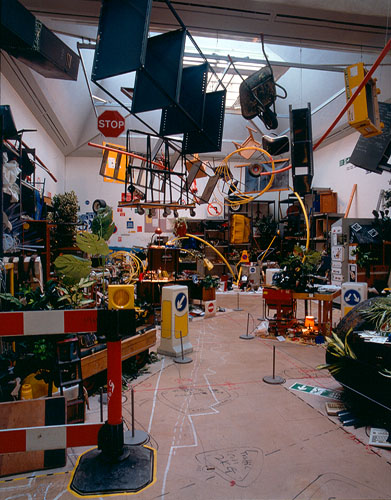
tomoko takashi

I enjoy the chaos of Takashi's work, and I like the way that she experiments with radical compositions. However I don't fully understand the concept behind it. The compositions are interesting and clearly thought out to an extreme degree, but I find them too controlled.


Roni Horn

Horn tries to explore the mutation of art through her photographs. I find her work hypnotic and seductive, but there is certainly something eerie about some of her images.She decribes drawing as the key activity in all her work, because drawing is about composing relationships; which I think is a very interesting perspective. In many way's I think that this is very true and a very good way of explaining visual communication.


tim noble & sue webster

I think these are really interesting images; they make you doubt your perception of things, and how they initially appear. I also love the self-portrait element of the photographs; the shadows typically being silhouettes of themselves.


Annie Liebowitz

Annie Liebowitz has the ability to really capture the character and personality of her model; whether it be celebrity or stranger. I think that it is this skill that makes her such an incredible photographer. There always seems to be a real connection between model and photographer, which is extremely apparent in her work.


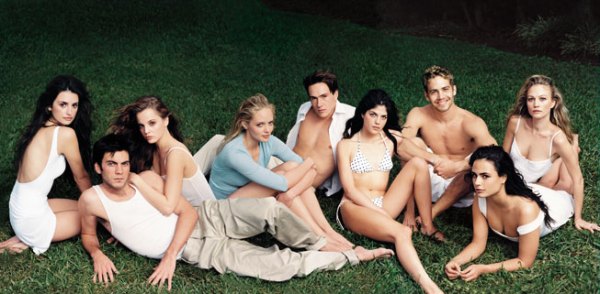
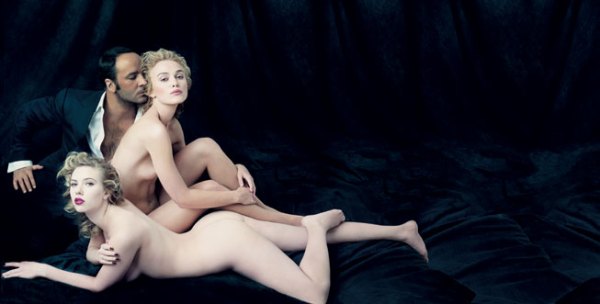
What I love most about these images for Vanity Fair is the way that the groups of famous actors and actresses that we would normally associate with being fairly untouchable, are presented to be casually grouped together to create some kind of super-celebrity. I also love the composition; the way that the images run across 3 pages but together make one long phototgraph.


A lot of her images are flirtatious and sexual, but also reflect very classical compositions.
I also lover her sense of humour, for example the image below:


She seems to capture the image of the 'celebrity'; strong, god-like characters, with an elevated status from the rest of us, as well as she manages to create the weak and the vulnerable. In this image of a victim of domestic violence, you really can read her pain; the way that her gaze is lost and longing, and the fact that she doesn't look straight on at the camera. I think that it is Liebowitz's ability to build relationships with her models that encourages them to bare themselves to the camera fully.


This photograph of Yoko Ono is one of my all time favourite photographs. I can't put my finger on why exactly, as I don't find the composition as intriguing or as interesting as some of her other work, but I just love the subtlety of it. She has a wonderfull abitity to capture a persons persnality.

Erika Raberg

I find this image by Erika Raberg both disturbing and really beautiful. The childhood iconography of a child with a bunch of balloons is something that you associate with being innocent and angelic, but this photograph radically alters your perception of that image in an instant. Even though all that is vi sable is the balloons and the tiny feet poking out of the bath, you know exactly what is being depicted. I think that you could draw multiple messages from this image, such as the death of a persons childhood etc. I actually find this image strangely beautiful and not at all sinister.


Ablelardo Morell

In these images by Ablelardo Morell, he appears to have exposed two images into one composition, creating some really interesting images. What I like especially is the contrasts he draws between outside and inside.


Jeff Wall

I love the implied spontaneity of this image by Jeff Wall. The blown paper creates a horizontal pattern along the bottom of the composition. I also love the amount of space in this photograph, the main event of the image occurring in the bottom third of the composition, with the spindly branches of the tree creeping up into the two top thirds.